

The rise in tech startups and the need for tech talent has never been more demanding than it is now. According to KPMG’s industry insiders survey, Singapore has potentially taken the position as the world’s leading technology hub, the next Silicon Valley, resulting in the need for strong Tech talent, in particular, Software Engineers.
The role of a Software Engineer has become even more critical as businesses become more digital and online-focused to remain relevant, to survive, and to grow in this current climate.
Watch our webinar as our guest speakers, Beverly Dolor, CTO of Pace Enterprise, Sau Sheong Chang, CEO of SP Digital and Ned Lowe, CTO of Singlife, share their insights and advice on:
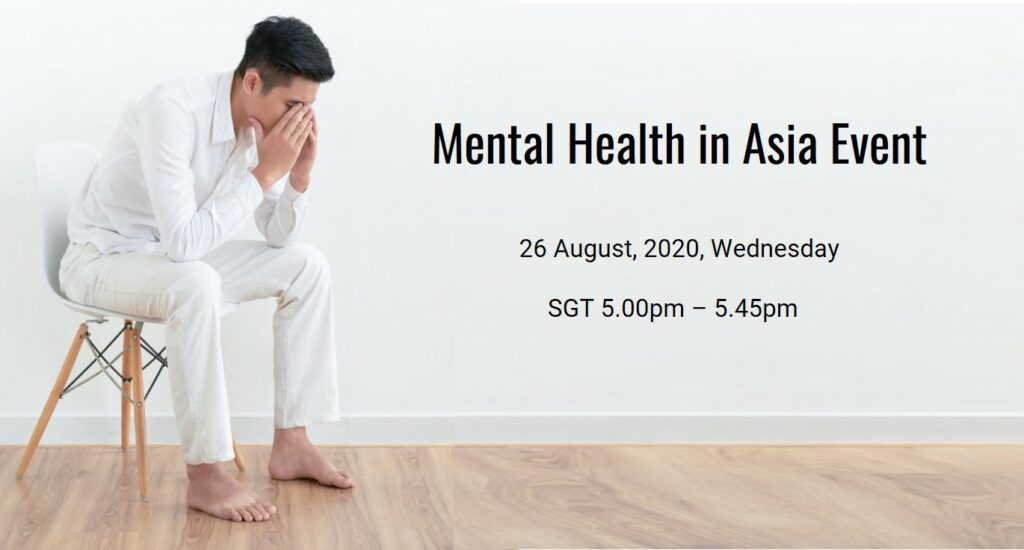
The impact of Covid-19, has placed many of us under copious amounts of stress and shaken our mental state. Mental Health, a topic often not spoken about in Asia, is the psychological well-being of an individual absent of mental illness.
This begs the question, is Asia ready to open up and begin talking about the importance of mental health? And, how are organisations addressing this issue, and supporting the mental health of their employees during this unprecedented period of time?
A big thank you to our speakers below who shared their personal experiences and advice with us.

Whether by necessity or choice, many people are looking at changing roles, switching industries, or refining their focus. Maybe it’s a life event or external forces at work, at times, we will all feel the call to develop our careers in new directions, and it’s vital that you know when to heed the call, and who can help you make the most of it.
Watch our webinar event and walk away with expert advice from leaders who have all managed their careers in ways that landed them new opportunities far different from the place they started.
Our CEO, Paul Endacott, was a guest speaker at a webinar hosted by Talent Trust on the topic of, ‘Giving Back Better: Developing Empathic Leaders’.
This is an insightful discussion as it deep-dives into how leaders can be more empathetic, the importance of empathy, and how empathy can drive motivation. Have a listen if this is the type of leader you want to be for your people:

Humans are creative, adaptable, curious, and resilient. People truly are the strongest link in cybersecurity – an industry that continues to be critical during this time of change. Watch to learn more about finding your place in infosecurity, spotting potential talent and starting a security business today. Our discussion included the following:
View our cybersecurity webinar on ‘The Strongest Link’ for some amazing insights, with a great panel of speakers comprising of:
Since Princes William and Harry spoke out in 2017 in the UK and launched the Heads Together campaign, mental health has been firmly on the business agenda. But, are we missing a great opportunity by not making the health and wellbeing of our employees a key strategic priority?
We all agree that the stigma of mental ill-health must be smashed. This issue is personal to me, having managed my challenges of bipolar disorder under the radar for 15 years. I owned my own business yet still felt the need to put “physio” in my diary every time I went to see my therapist. My lightbulb moment came when I heard campaigner, Geoff McDonald, share his story of anxiety and depression and the loss of his friend to suicide. My eyes were opened to the movement that was forming to create mentally healthy workplaces. From that moment I decided to share my story and look for a way to contribute.
“We need more CEOs and those in positions of leadership come out and talk about their mental health.” The Duke of Cambridge, Davos 2019
As we reach adult life, our role models are predominantly drawn from the workplace. Yes, we will look to our sporting heroes and celebrities, but we better relate to those that lead the organisations where we spend most of our time. The problem is that, because of the stigma of mental illness, we do not have enough of our workplace leaders who are leading on the mental health agenda. This was the message that I heard consistently in 2017 and this was the problem that I decided to try and help address.
Anyone who speaks out and shares their story of mental ill-health is a role model and creates a ripple. If we generate enough ripples, we have a wave and it is this wave that will smash the stigma. Why, therefore, are senior leader role models so important?
When our leaders speak out and get behind the mental health agenda, they start the process of culture change. Initially, the culture shifts to one where it is OK to put your hand up and say that you are struggling with mental ill-health. It is OK to seek help and, in some cases, receive adjustments to your role. However, the culture change does not end there as the emphasis expands outwards from the people who are struggling and need help to include everybody else in the workplace. We end up creating cultures that encourage everyone to proactively manage their mental health and wellbeing. We move to a culture of prevention and one that truly values the humans that are “the greatest assets” of the workplace.
We see this culture change happen almost overnight in smaller businesses.
Mark Twigg is one of the Founding Directors of Cicero, the UK’s leading financial PR business. Mark shared his story of clinical depression with the whole business over 2 years ago.
Rob Agnew had heard about the positive attitude towards mental health at Cicero before applying for a role. He felt comfortable in disclosing that he experiences bipolar disorder in the interview process. 18 months after joining the firm, he has not had an episode of mania and puts this largely down to the fact that he can be open and himself at work. Furthermore, Mark himself has not experienced an episode of depression in the same timescale.
Every leader in the workplace has a personal story of mental ill-health. There is no CEO on the planet who has not experienced times of extreme stress; under-recovery; lack of sleep; bereavement or relationship breakup. There is also no CEO on the planet who does not experience mental health and wellbeing, one of the most beautiful and amazing things about being human. We all have a story where our mental health is concerned.
Mental ill-health does not discriminate by nationality, by ethnicity, by gender, or by bank balance. However, the stigma associated with mental illness is definitely not distributed evenly. You are much more likely to disclose a struggle with mental ill-health in a UK workplace than you would in Japan, or the Middle East or Asia. This is why we must work on smashing the stigma everywhere.
Why am I doing this? Because it is the right thing to do.
We are very keen on working with organisations across all of these territories to showcase senior leader role models and help inspire workplace cultures where everyone feels able to ask for help if they are experiencing a mental health challenge.
It was really interesting to see an evolution of the purpose of our corporations coming out of the Business Roundtable in the US recently. It is encouraging to see that investment in employees and impact on communities are being thought of as core purpose, alongside the creation of shareholder value. I would have liked to see the prioritisation of the mental health and wellbeing of employees more explicitly stated within this.
In his first month as HSBC’s Group CEO, John Flint announced the vision of “Creating the healthiest human system in financial services”. The UK’s Environment Agency has a core value of work being a “life enhancing experience”. We have seen a recent “wellbeing budget” in New Zealand and there are calls for measures of health and happiness to replace GDP growth as the measure of success of our economies. If we prioritise the wellbeing of our employees, will this result in a reduction in the growth shareholder value? Personally, I think that the reverse will be the case.
We have to smash the stigma of mental ill-health before any other interventions will fully work. I look forward to working with organisations around Asia to break that stigma to promote a healthy mental workplace.